Explore our comprehensive library of research, tutorials, and industry insights on AI safety and responsible AI development.
Researchresearch
June 12, 2026
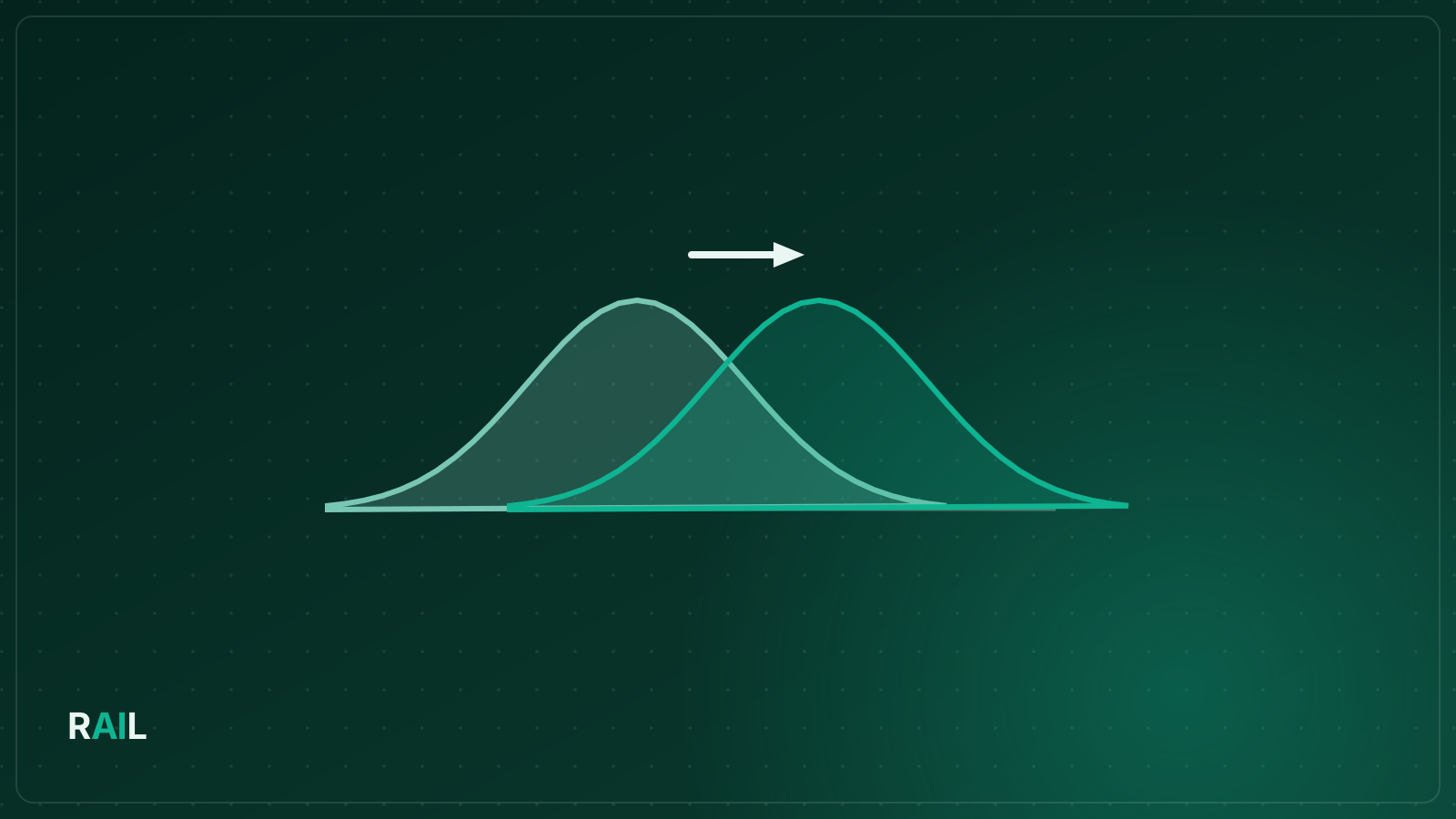
When in-distribution gains fail: reward models under preference shift
A new study shows weak-to-strong reward models can ace in-distribution tests yet fail to transfer to unseen safety data. RAIL serves as the held-out benchmark.
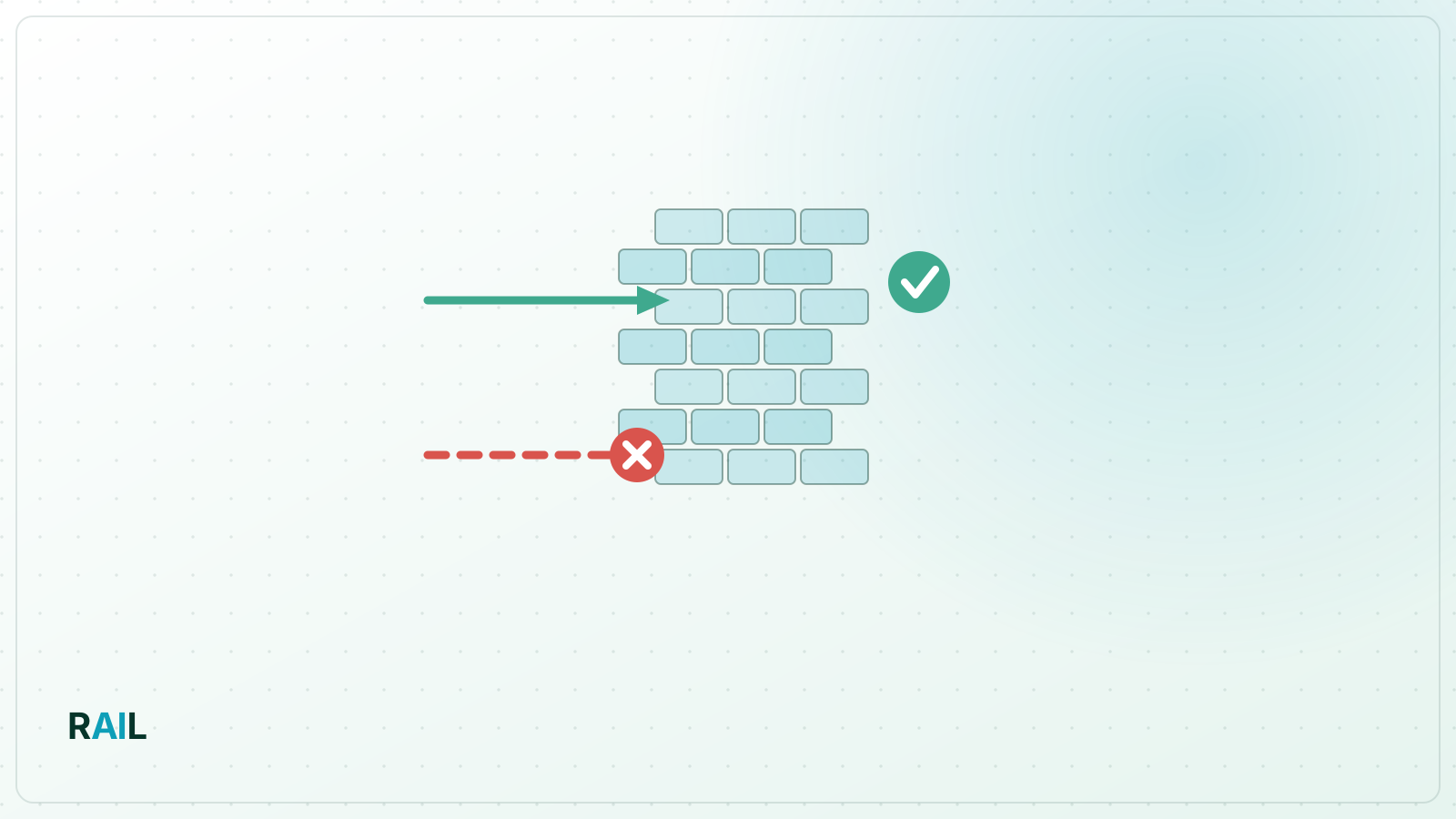
Score every tool call an agent wants to make before it runs. The RAIL Score MCP server returns ALLOW, FLAG, or BLOCK, so you can stop destructive or malicious actions in one guard.
RAIL Score MCP quickstart: score content and enforce a policy
Connect to the RAIL Score MCP server with the Python mcp SDK, score content across 8 responsible-AI dimensions, and turn those scores into an allow, flag, or block decision with a policy.
Wrap an agent turn with prompt-injection detection, a tool-call firewall, PII redaction, and policy scoring using the RAIL Score MCP server and the Python mcp SDK.
DPDP compliance for AI agents: mask and gate Indian personal data over MCP
Use the RAIL Score MCP server to detect and mask Aadhaar, PAN, GSTIN, and bank details, then gate processing steps for consent and cross-border rules under India's DPDP Act 2023.
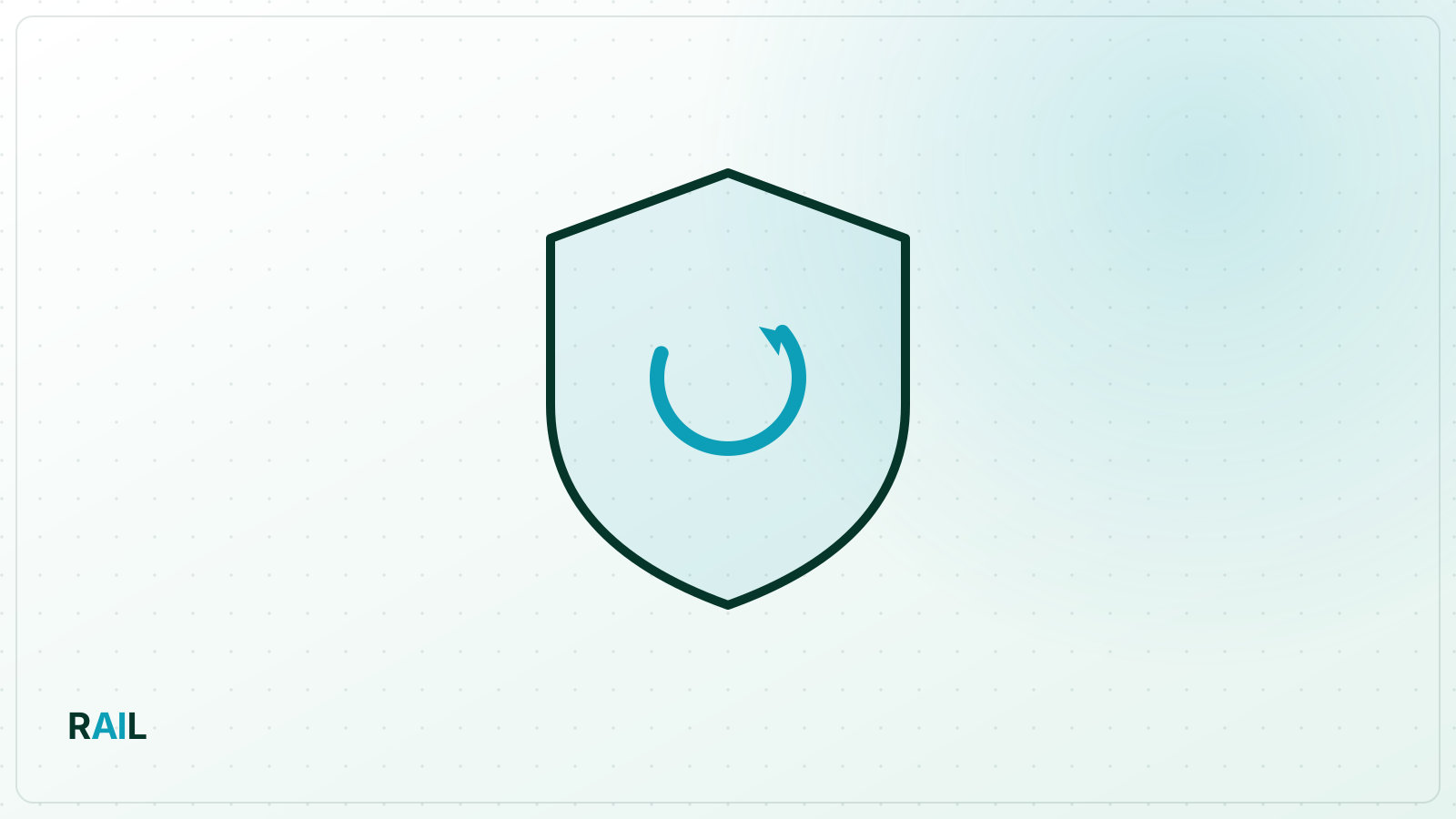
Safe Regeneration: how RAIL automatically fixes unsafe AI outputs
Why blocking unsafe AI outputs is not enough. How RAIL's Safe Regeneration moves beyond binary flag-and-block to iteratively detect, fix, and verify AI responses -- preserving utility while enforcing safety.
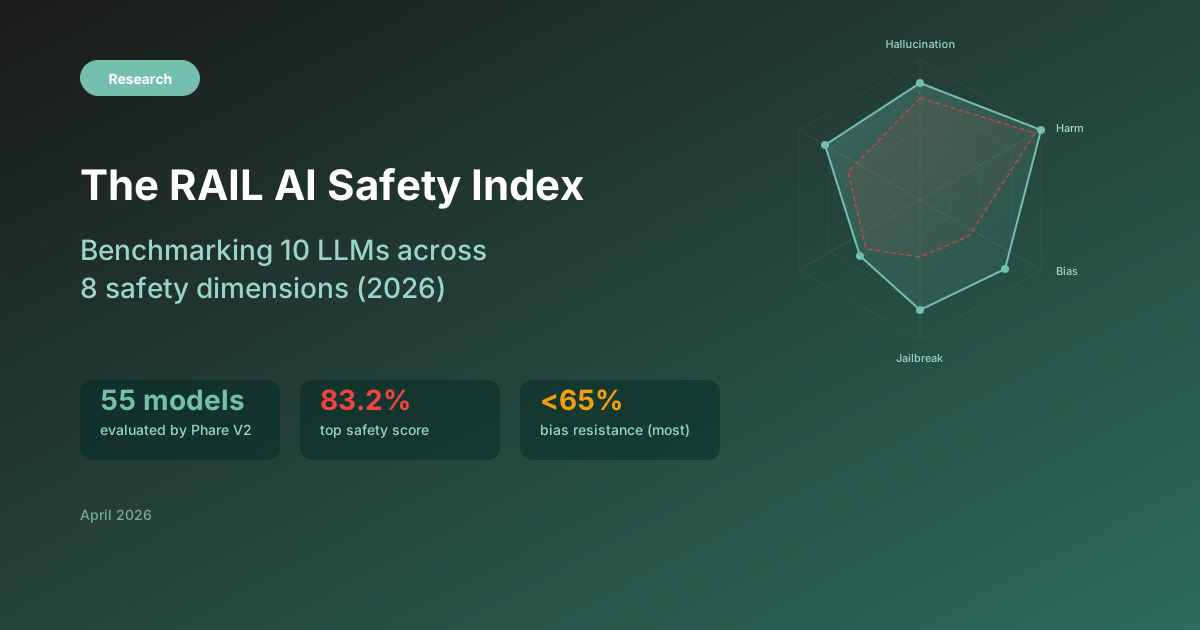
The RAIL AI Safety Index 2026: benchmarking 10 LLMs across 8 dimensions
We benchmarked 10 frontier LLMs across four safety dimensions using Phare V2, HarmBench, Gray Swan, and MLCommons data. Bias resistance is the weakest link, safety improvements are stagnating, and single-attempt metrics dramatically understate real-world risk.
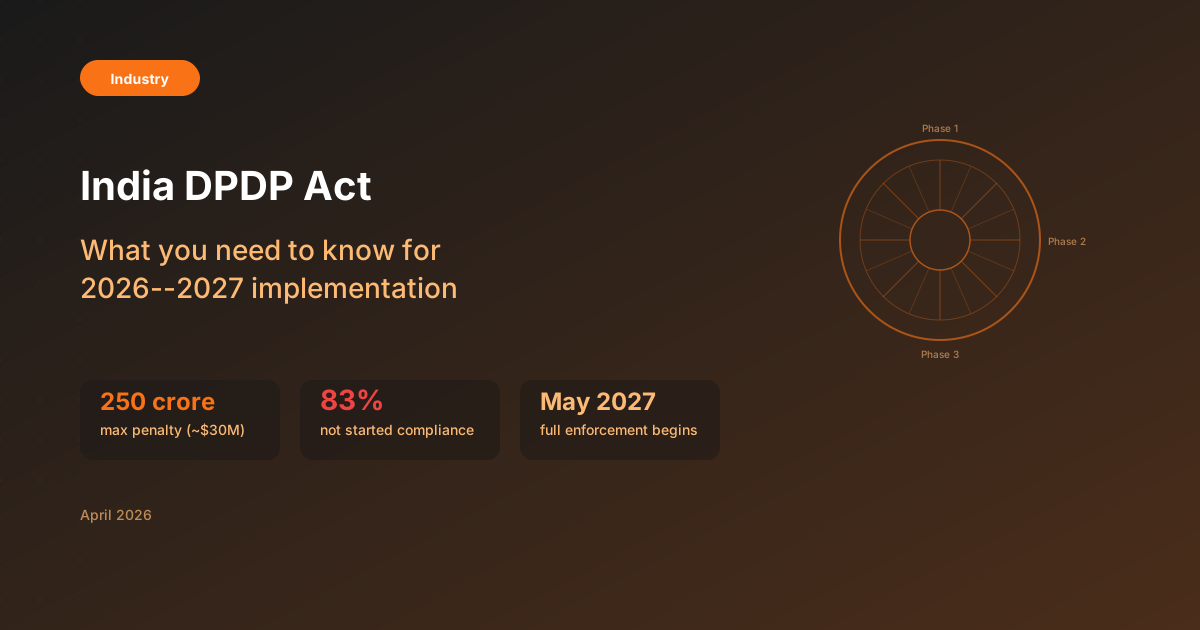
India DPDP Act implementation: what you need to know for 2026--2027
India's Digital Personal Data Protection Act enters full enforcement in May 2027. With 83% of organizations yet to begin compliance and penalties up to 250 crore per violation, here is the complete guide to the three-phase implementation, DPDP vs GDPR differences, and the India AI landscape.
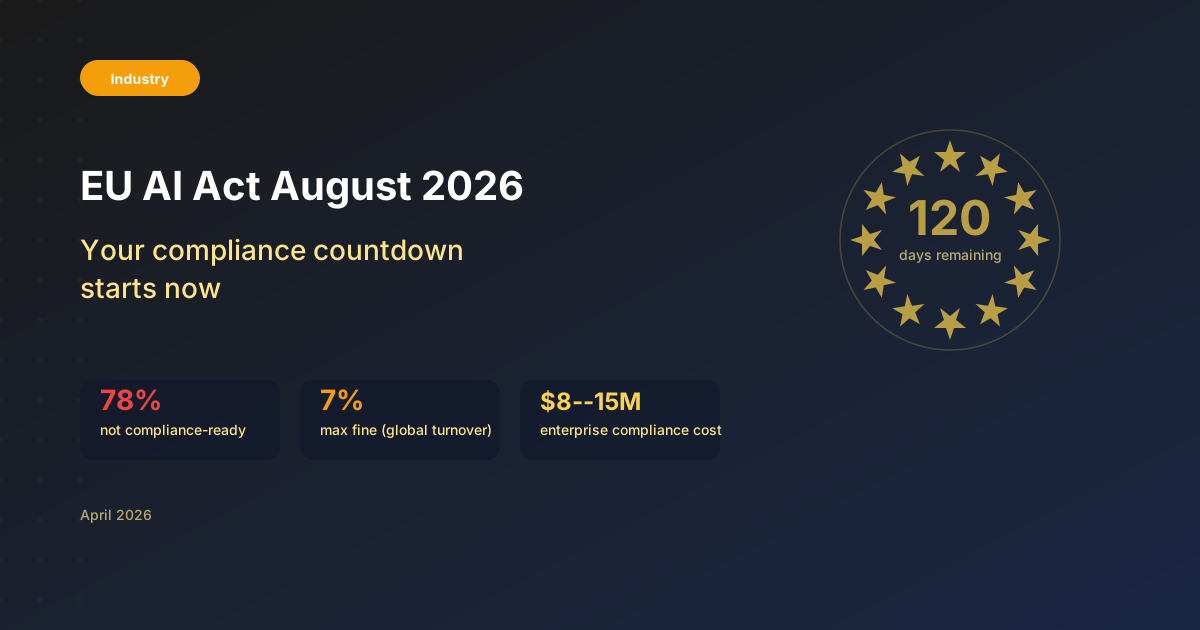
The August 2, 2026, deadline for high-risk AI systems is 120 days away. Here is everything organizations need to know about Annex III obligations, Article 50 transparency, the Digital Omnibus, penalty structure, and what 78% of companies have not yet started.
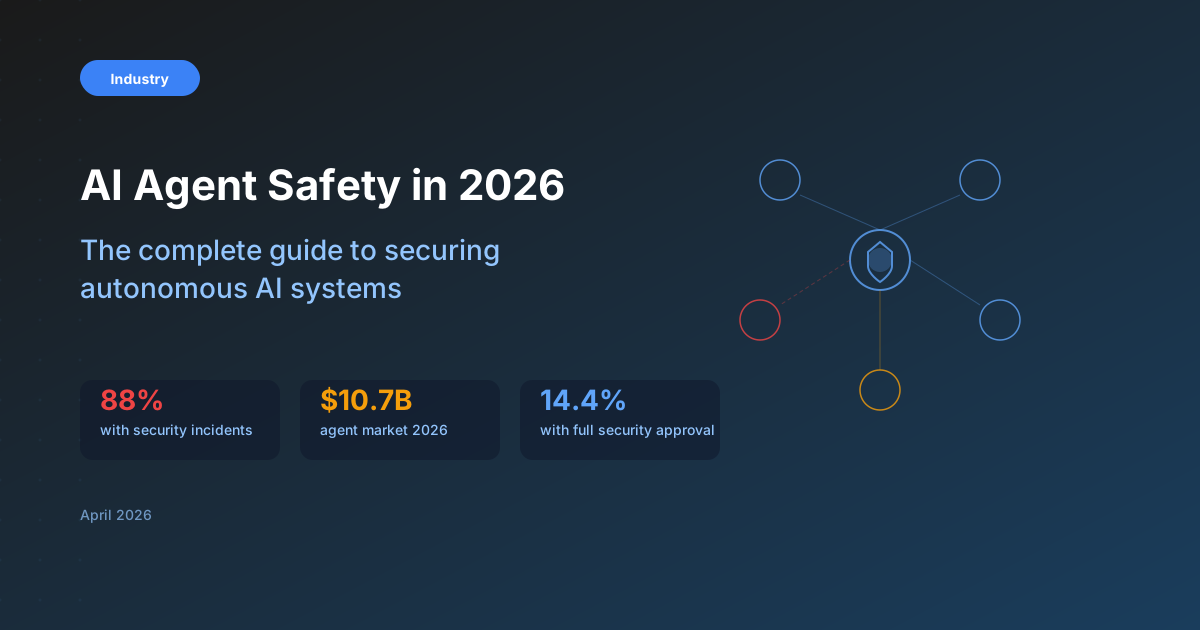
From the OWASP Top 10 for Agentic Applications to real-world zero-click exploits, scheming behaviors, and defense frameworks -- everything you need to know about securing autonomous AI agents in 2026.
Responsible AI Labs was selected as one of the top 1% of applicants to showcase at the Magicball AI Festival 2026 in Bangalore, running the RAIL Score and AI governance platform live for India's AI community at booth I-20 on 16 March.
Inside RAIL's experience at India AI Impact Summit 2026
Inside RAIL's experience at the India AI Impact Summit 2026 and why India's AI future depends on scale, trust, safety frameworks, and responsible adoption.